
Introduction
In the current digital era, having an online presence has become important for businesses, professionals, and individuals. Almost every user searches on Google before making a decision, whether it is buying a product, learning something new, or finding a service. However, simply creating a website does not guarantee that people will find it so in this we will learn what is seo and how we will optimize it
There are millions of websites available on the internet, and every business wants to appear in front of its target audience. This is where SEO (Search Engine Optimization) becomes important.
SEO helps websites improve their visibility on search engines and attract visitors through organic search results. It is one of the most effective digital marketing strategies because it helps websites gain long-term growth without depending only on paid advertisements.
In this guide, we will understand how it works, why it is important, different types of SEO, and basic SEO practices for beginners.
What is SEO?
SEO (Search Engine Optimization) is the process of improving a website’s content, structure, and technical performance to increase its ranking on search engine result pages (SERPs).
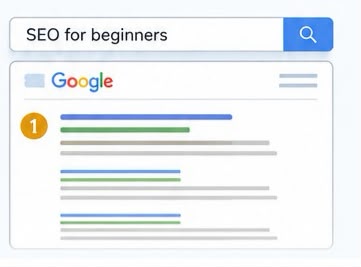
When users search for something on Google, search engines analyze different websites and decide which pages provide the most relevant and useful information. SEO helps search engines understand your website better and increases the chances of appearing in front of the right audience.
For example, if someone searches for:
- SEO for beginners
- WordPress SEO
- Digital marketing services
- Keyword research tools
Google shows websites that are considered useful and relevant for those searches.
A properly optimized website has better opportunities to receive organic traffic, which means visitors who find your website naturally through search engines.
Why it is Important for Websites?
SEO plays an important role in the success of a website. Without SEO, even a well-designed website may not reach its target audience.
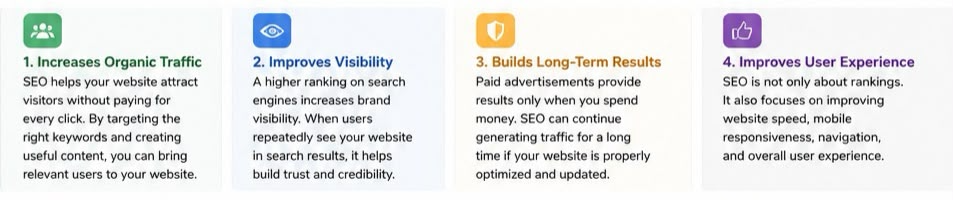
1. Helps Increase Organic Traffic
The main purpose of SEO is to bring more visitors to a website through unpaid search results. When your website ranks higher on Google, more people can discover your content, products, or services.
Organic traffic is valuable because users are already searching for information related to your website.
2. Improves Website Visibility
A website appearing on the first page of search results has more chances of receiving clicks. SEO helps improve online visibility and makes your brand easier to discover.
For example, a small business with proper SEO strategies can compete with larger brands by targeting the right keywords.
3. Builds Trust and Credibility
Users usually trust websites that appear higher in search results. A well-optimized website with useful content, secure browsing, and good user experience creates a positive impression.
4. Provides Long-Term Benefits
Paid advertisements can provide quick results, but traffic stops when the advertising budget ends. SEO focuses on building a strong online foundation that can continue generating results over time.
How Does it Work?
Search engines like Google use algorithms to analyze websites and rank pages according to different factors. SEO works by improving these factors so search engines can easily understand and recommend your website.
Some important elements of SEO include:
Keyword Research
Keyword research is one of the most important parts of SEO. Keywords are the words or phrases users type into search engines.
Examples:
- SEO services
- SEO checklist
- Website optimization
- Search engine optimization
Finding the right keywords helps you create content that matches what your audience is searching for.
A good keyword strategy includes:
- Understanding user search intent
- Checking search volume
- Analyzing competition
- Using keywords naturally in content
High-Quality Content
Content is the foundation of SEO. Search engines prefer websites that provide valuable, original, and helpful information.
SEO-friendly content should:
- Answer user questions
- Provide accurate information
- Use proper headings
- Include relevant keywords naturally
- Be easy to read
Creating helpful content improves user experience and increases the chances of ranking higher.
Website Optimization
SEO also focuses on improving the overall website structure.
Important website optimization factors include:
- Fast loading speed
- Mobile-friendly design
- Easy navigation
- Clean URLs
- Proper internal linking

Different Types of SEO
SEO is mainly divided into three major types:
1. On-Page SEO
On-Page SEO refers to optimizing elements available directly on your website pages.
Important On-Page SEO factors include:
Title Tags
The title tag tells search engines and users what a page is about. A relevant keyword should be included naturally in the title.
Meta Description
A meta description is a short summary that appears below the title in search results. It helps users understand what they will find on the page.
Heading Structure
Proper headings improve content readability.
Example:
- H1 – Main Topic
- H2 – Main Sections
- H3 – Subsections
Keyword Optimization
Keywords should be placed naturally in:
- Titles
- Headings
- Paragraphs
- Image alt text
Avoid keyword stuffing because it can negatively affect rankings.
Internal Linking
Internal links connect different pages of the same website. They help users explore more content and help search engines understand website structure.
2. Technical SEO
Technical SEO focuses on improving the technical performance of a website.
Important technical SEO practices include:
Website Speed Optimization
A slow website can create a poor user experience. Improving page speed helps visitors stay longer on your website.
Mobile Optimization
Since many users browse websites through smartphones, having a mobile-responsive website is essential.
XML Sitemap
An XML sitemap helps search engines discover and index website pages easily.
Robots.txt
Robots.txt provides instructions to search engine crawlers about which pages they can or cannot access.
SSL Certificate
HTTPS makes a website secure and improves user trust.
3. Off-Page SEO
Off-Page SEO includes activities performed outside your website to improve authority and reputation.
Some common Off-Page SEO methods are:
- Creating quality backlinks
- Guest blogging
- Social media promotion
- Online brand mentions
Backlinks from trusted websites can improve your website authority and help search engines recognize your website as reliable.
Basic SEO Practices for Beginners
Beginners can start by following these simple practices:
1. Perform Keyword Research
Before writing content, identify keywords that your target audience searches for.
Use tools like:
- Google Keyword Planner
- Ubersuggest
- Google Trends
2. Create Valuable Content
Always focus on creating content that provides solutions. Search engines prioritize websites that help users.
3. Optimize Images
Images should be properly optimized by:
- Compressing image size
- Using descriptive file names
- Adding alt text
4. Improve User Experience
A good website should be:
- Easy to navigate
- Fast loading
- Mobile-friendly
- Visually clear
5. Update Content Regularly
SEO is an ongoing process. Updating old blogs and improving existing content can help maintain rankings.
Common SEO Mistakes to Avoid
Many beginners make mistakes while implementing strategies.
Some common mistakes include:
- Using too many keywords unnaturally
- Copying content from other websites
- Ignoring technical SEO
- Not optimizing images
- Creating low-quality backlinks
- Forgetting mobile optimization
Avoiding these mistakes helps create a stronger SEO foundation
Conclusion
SEO is an essential strategy for anyone who wants to grow online. It helps websites improve visibility, attract organic traffic, and connect with the right audience.
For beginners, understanding the basics of Search Engine Optimization, Keyword Research, On-Page SEO, and Technical SEO is the first step toward creating a successful website.
It requires patience and continuous improvement, but consistent efforts can provide long-term benefits. Whether you have a business website, blog, or online store, implementing proper SEO strategies can help you achieve better rankings and build a stronger digital presence.
By focusing on useful content, technical improvements, and user experience, anyone can start improving their website performance with SEO.